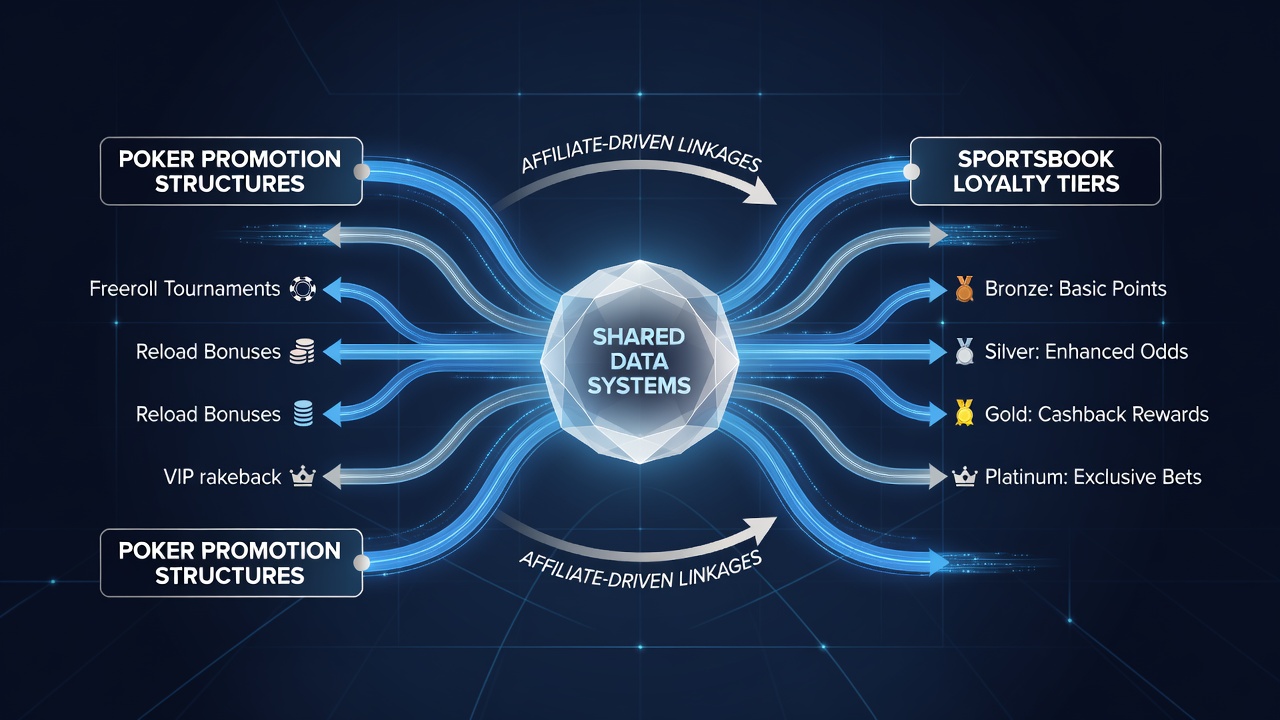
Charting Affiliate-Driven Linkages Between Poker Promotion Structures and Sportsbook Loyalty Tiers Through Shared Data Systems
Integrated gaming platforms connect poker promotion structures to sportsbook loyalty tiers through affiliate-managed data systems that track player activity across both verticals. These systems pull registration data, deposit records, and tournament results from poker sections then map them onto tiered reward frameworks used by sportsbooks. Affiliates serve as the intermediaries that configure the linkages, ensuring points earned in one area convert into credits or enhanced odds in the other without manual intervention from operators.
Poker Promotion Structures in Multi-Vertical Platforms
Poker promotions typically begin with deposit matches, freeroll entries, and rakeback percentages that accumulate based on volume played. Shared databases record each transaction and feed the information forward to loyalty engines that also power sportsbook rewards. When a player completes a qualifying poker deposit, the system logs the amount and triggers an affiliate tag that carries eligibility forward to upcoming sports betting tiers. Operators in regions such as Nevada and New Jersey have documented these automated handoffs since the expansion of online multi-vertical sites in 2024.
Sportsbook Loyalty Tiers and Their Data Requirements
Sportsbook loyalty programs assign tiers according to total handle, loss thresholds, or engagement frequency, with benefits that include boosted odds, cashback percentages, and exclusive event access. The same data pipelines that capture poker results also supply the metrics needed for tier advancement in the sportsbook section. A player who reaches a mid-level poker milestone can see that progress reflected immediately in their sportsbook dashboard because the affiliate platform synchronizes the underlying records daily. Figures released by the New Jersey Division of Gaming Enforcement show continued growth in cross-vertical player bases through the first three quarters of 2026.
Affiliate Role in Configuring Shared Data Pipelines
Affiliates design the tracking parameters that decide which poker actions count toward sportsbook tier progress and vice versa. They set conversion rates, define qualifying events, and establish time windows during which accumulated activity remains valid. In practice this means an affiliate can route a percentage of poker rake directly into a sportsbook loss-recovery pool or map tournament cashes to accelerated tier points. Platforms active in October 2026 began rolling out updated application programming interfaces that allow affiliates to adjust these rules in real time while maintaining compliance with data-protection standards.
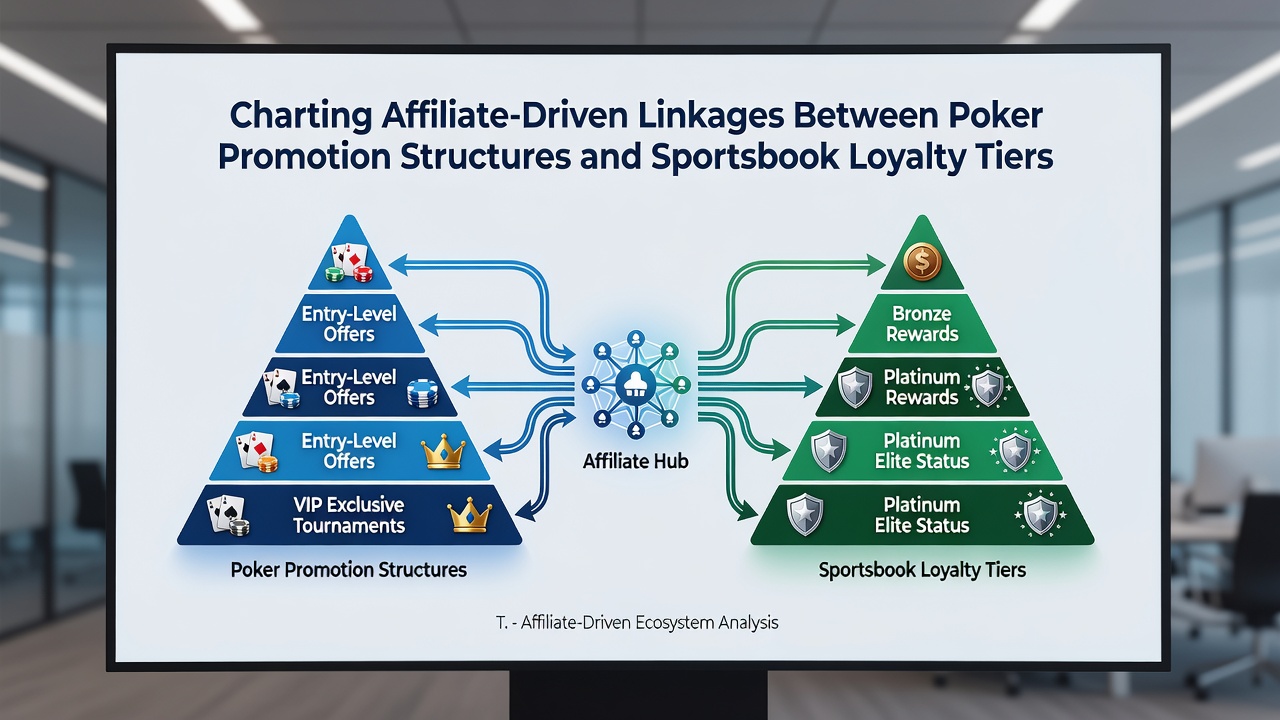
One documented case involved an affiliate network that linked a series of Omaha 8 tournaments to a sports betting cashback program. Players who registered through the affiliate received automatic entry into both the poker events and a parallel tier that unlocked enhanced football prop bets. The configuration relied on a single customer identifier passed between the poker client and the sportsbook engine, eliminating duplicate sign-ups and reducing reconciliation errors.
Authentication and Reward Distribution Mechanics
Authentication protocols serve as the gatekeepers that verify a player qualifies for linked rewards. When a user logs into the poker client, the system checks the affiliate tag against the shared customer record and confirms active tier status in the sportsbook. Successful verification unlocks the corresponding promotion instantly. Researchers at the University of Nevada, Las Vegas Gaming Innovation Center have examined these protocols and noted that single sign-on frameworks reduce friction while preserving audit trails required by regulators in multiple jurisdictions.
October 2026 Platform Updates and Data Integration Trends
During October 2026 several operators introduced enhanced data schemas that tag each poker outcome with metadata indicating its potential value for sportsbook tier calculations. Affiliates received access to sandbox environments where they could test new linkage rules before deployment. The changes coincided with the release of updated reporting dashboards that display cumulative progress across both verticals in a single view. These dashboards pull from centralized warehouses that store historical activity dating back to 2023, allowing precise measurement of how poker volume correlates with later sportsbook engagement.
Data pipelines now incorporate real-time event listeners that capture tournament results within seconds of completion and push the information to loyalty calculation modules. This speed matters because many sportsbook promotions operate on short eligibility windows tied to specific sporting calendars. Affiliates who configure the listeners correctly ensure players receive tier benefits before the windows close.
Conclusion
Shared data systems managed by affiliates create measurable pathways that convert poker promotion activity into sportsbook loyalty advancement. The technical architecture relies on standardized identifiers, synchronized databases, and configurable conversion rules that operators update periodically. Regulatory bodies in Nevada, New Jersey, and Ontario continue to review these linkages to confirm they meet responsible gaming and data integrity standards. As platforms refine their application programming interfaces, the precision of these cross-vertical connections continues to increase without requiring separate player actions.